


Cyber Security Breach update: Rockstar Games is back in the cyber spotlight. This time, the company says a third-party breach exposed limited internal information.
As of April 14, 2026, Rockstar confirmed the access to internal company information. On the surface, that sounds contained. Underneath it, business owners should pay close attention.
The latest cyber security breach headline carries a familiar warning. Companies no longer defend only laptops, servers, and staff logins. They also defend every outside platform, analytics tool, cloud connection, and token sitting between systems.
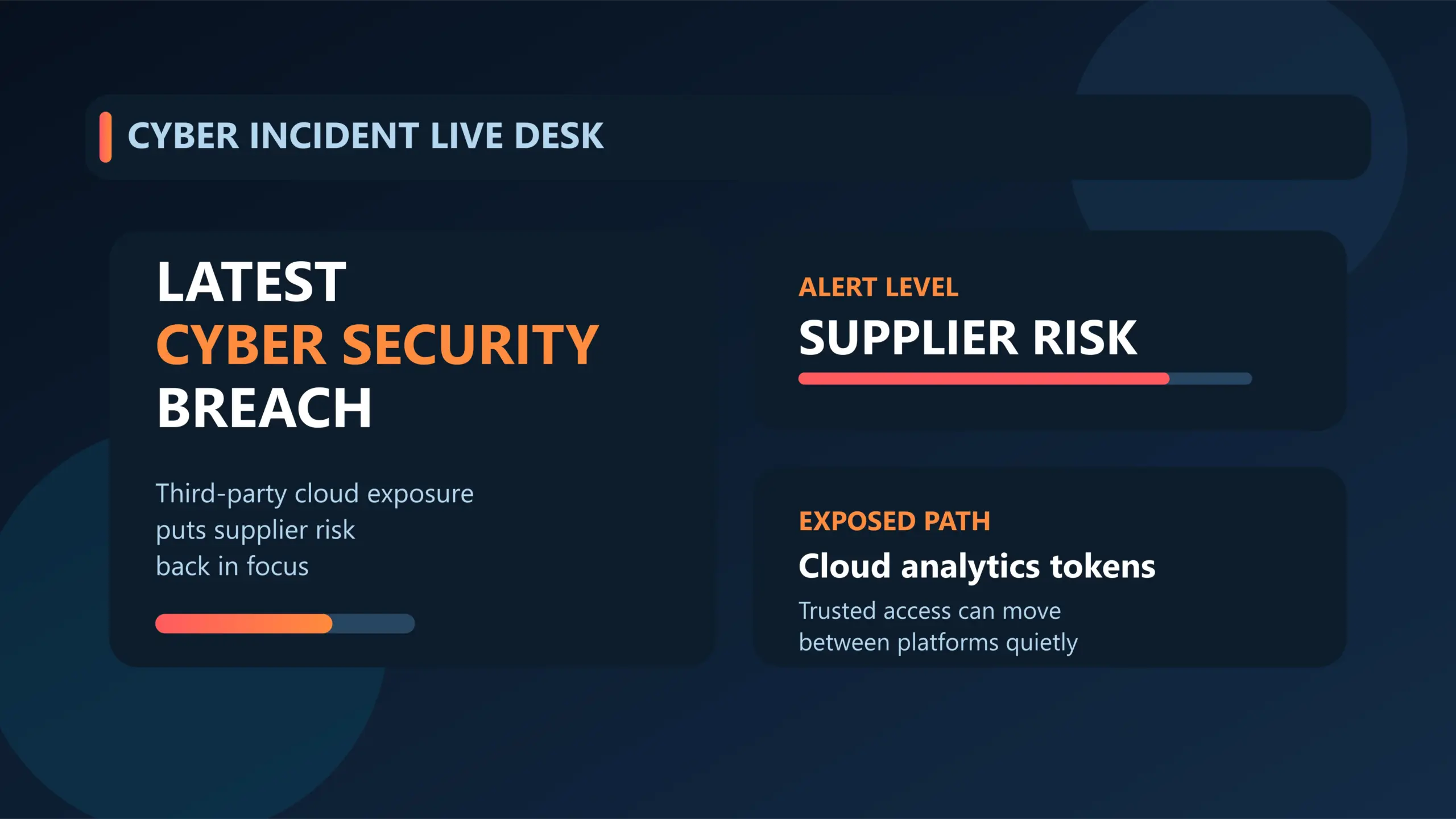
Rockstar said the incident exposed a limited amount of non-material company information. The company also said the incident did not affect the organisation or its players. Even so, the case belongs in cyber security news because of the alleged attack path.
Reports point to Anodot, a cloud analytics and monitoring platform. Threat actors claimed the exposure involved data in a Snowflake cloud environment. That detail turns this from a brand story into a supplier-risk lesson.
The weak point is often not the company in the headline. It can be the service provider sitting two steps behind it.
From a newsroom chair, the pattern is hard to miss. The company name changes. The technology stack changes. The script keeps coming back. Attackers compromise a trusted platform, abuse access material, and leave the customer to manage the fallout.
What happened in the latest cyber security breach?
Reporting published on April 13, 2026, says the ShinyHunters cybercrime group claimed responsibility for breaching systems linked to Rockstar Games. The group also threatened to leak stolen data if Rockstar did not meet its demands.
Rockstar later confirmed data access connected to a third-party breach. The company also said the operational impact remained limited.
The alleged attack path deserves the most attention. Reports say attackers may have obtained authentication tokens tied to a third-party platform. That access can open customer cloud environments without a direct breach of each victim.
If that account holds up, it shows how cloud breaches often spread now. Attackers do not always batter down the front door. Sometimes they slip through a trusted side entrance.
For Australian organisations, this is not just offshore entertainment-industry drama. Many local businesses rely on managed cloud stacks, reporting tools, SaaS dashboards, outsourced monitoring, and productivity platforms. Those platforms often connect with privileged access. That convenience saves time, but it widens the blast radius when one supplier gets hit.
Cyber Security Breach Lessons From the Rockstar Report
The bigger story here is how modern attacks travel sideways.
Attackers do not always need to break your front door. They can borrow a key from someone already inside the building. That key might be an exposed token, an over-permissioned service account, an old API secret, or a forgotten monitoring integration.
For many small and mid-sized businesses, third-party exposure hides in plain sight. Internal teams may patch endpoints, enforce MFA, and invest in secure backups. Yet a supplier with broad access can still create a path to sensitive data.
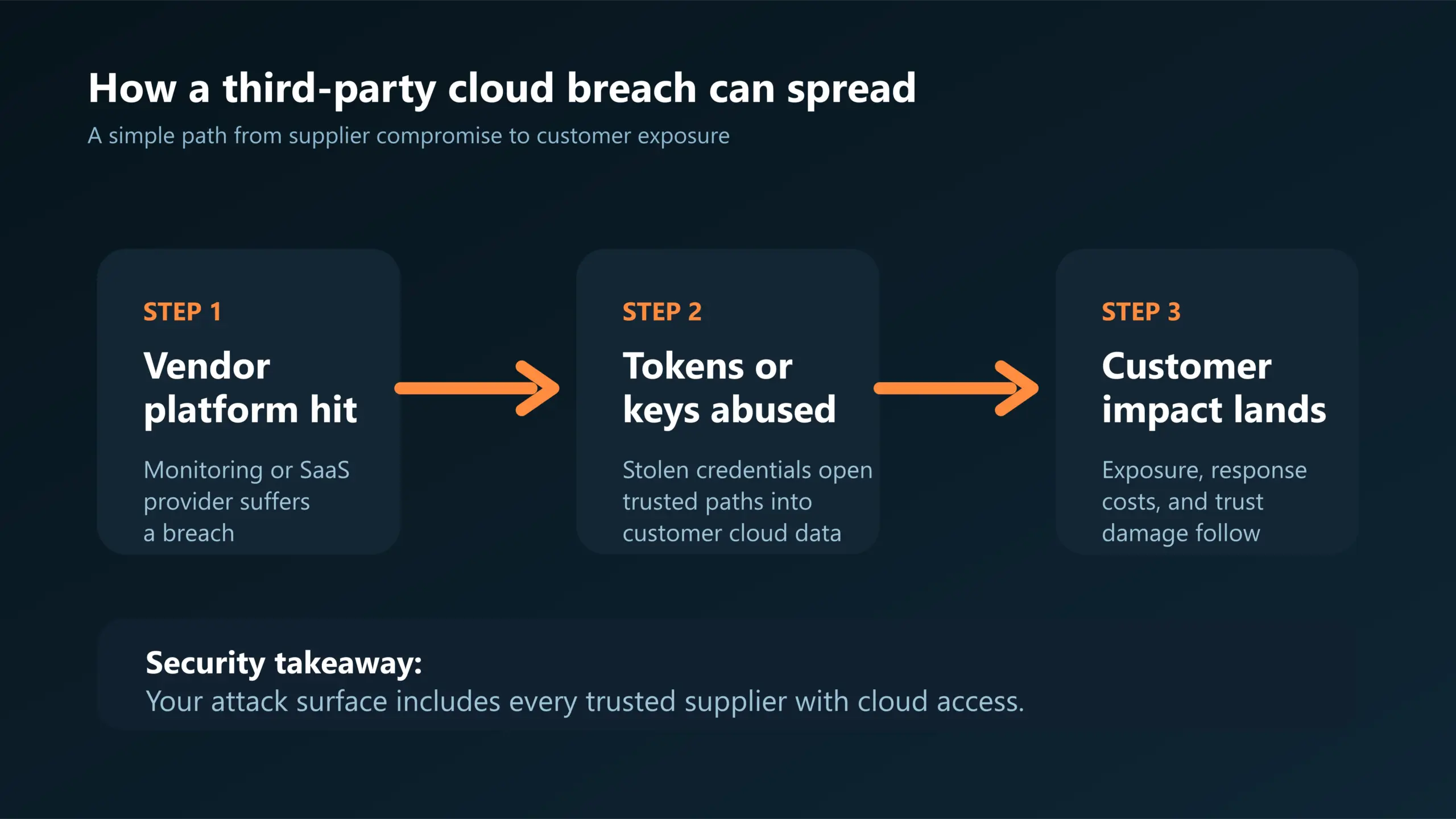
That is why this latest cyber security breach should matter to business owners, directors, and operations teams. It is not only a CISO problem. If your company uses cloud billing tools, analytics services, cost-monitoring platforms, Microsoft 365 integrations, or external IT providers, supplier access forms part of your attack surface.
The fallout can move quickly. One platform breach can create data exposure, reputation damage, legal headaches, response costs, customer concern, and urgent credential resets.
The cyber security lessons Australian businesses should take from this
This latest cyber security breach should push companies to ask direct questions now.
First, who has access to your cloud environment today through third-party tooling? Not who had access last quarter on paper. Who has access right now?
Second, which tokens, keys, service accounts, and app-to-app connections could help an attacker pivot if a supplier suffered a breach?
Third, if a software provider called tomorrow with breach news, would your team know what to disable, rotate, isolate, or monitor first?
Too many businesses still treat third-party security like a procurement checkbox. It needs to sit inside day-to-day operations. Keep vendor reviews active after onboarding. Limit access to what each platform actually needs. Rotate old credentials. Retain logs. Replace shared secrets before they become permanent. Treat every trusted connection as something attackers may test.
There is also a communication lesson here. Rockstar moved quickly to confirm the incident and reduce speculation around impact. That matters. In a breach, silence creates its own mess. Fast, accurate, measured communication can stop a security incident from becoming a bigger trust problem.
What businesses should do next
If this latest cyber security breach feels familiar, it is because the same themes keep resurfacing. Entertainment, healthcare, government, finance, logistics, and professional services all face versions of the same problem. They run too many connected systems, inherit too much trust, and lack enough visibility into supplier access.
For Australian businesses, the response should be practical rather than panicked:
- Review every third-party platform with access to cloud or production data.
- Rotate exposed or aging API keys, tokens, and service credentials.
- Enforce MFA and conditional access wherever possible.
- Limit vendor permissions to the minimum required.
- Maintain immutable, tested backups.
- Monitor logs for unusual access from integrated services.
- Build an incident response checklist that includes supplier-driven breaches.
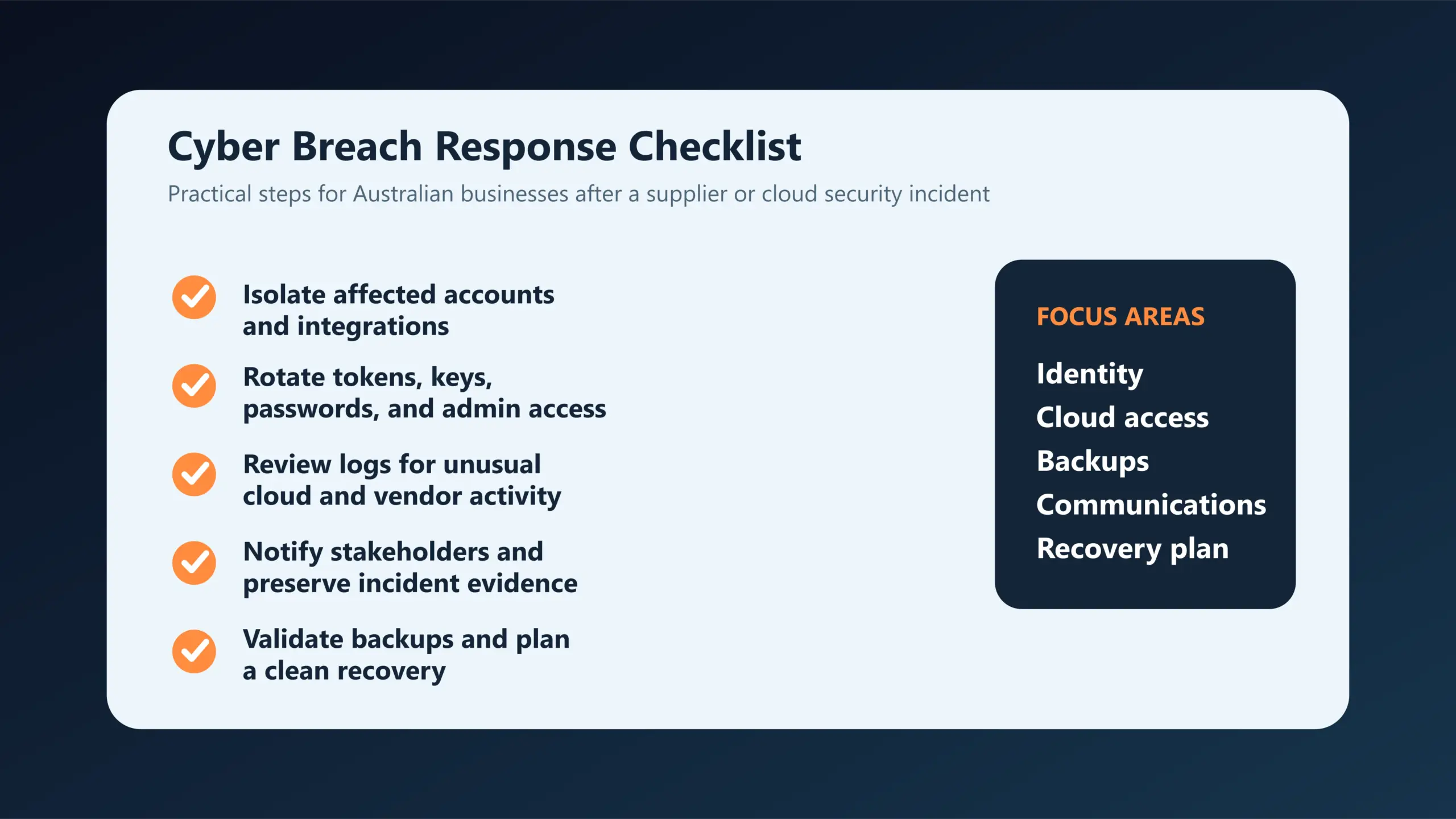
Organisations that want to tighten this posture should focus on practical resilience. That means managed monitoring, identity hardening, secure cloud configuration, and tested recovery planning. Compuloop supports those needs through its Cybersecurity Australia service, Microsoft Modern Workplace support, and Data Backup Solutions.
Final word
The latest cyber security breach involving Rockstar Games may not become the biggest breach of the year. It may not become the most damaging either. But it gives businesses a clear example of how modern attacks work.
- They follow trust.
- They follow integrations.
- They follow convenience.
When businesses watch the systems but ignore the links between them, attackers do not need to force their way in. They take the path that is already open.
That is the warning in this latest cyber security breach story. Australian businesses should not shrug it off.
FAQ: Latest cyber security breach
What is the latest cyber security breach in the news?
As of April 14, 2026, one high-profile confirmed incident involved Rockstar Games. The company said a third-party breach exposed limited company information.
Was Rockstar Games directly hacked?
Public reporting connects the incident to a third-party cloud analytics breach. Rockstar confirmed data access and said the impact remained limited.
Why does this breach matter for small businesses?
It shows how third-party software, cloud integrations, and authentication tokens can expose business data. The original compromise may begin outside your own company.
How can businesses reduce third-party breach risk?
Limit vendor access, rotate credentials, enforce MFA, monitor cloud logs, review integrations, and maintain tested backups and incident response plans.
Source: Reporting from The Record, published April 13, 2026.