




Managed AI Services Australia

Managed AI Services Australia

First, turn scattered AI licences and experiments into a secure, measurable business tool. Then let Compuloop manage strategy, rules, rollout, GPU infrastructure and ongoing improvement as one accountable service.

Australian + US infrastructure optionsHuman approval by designGPU-ready architecture
NVIDIA Blackwell Ultra GPU accelerator
NVIDIA Blackwell Ultra
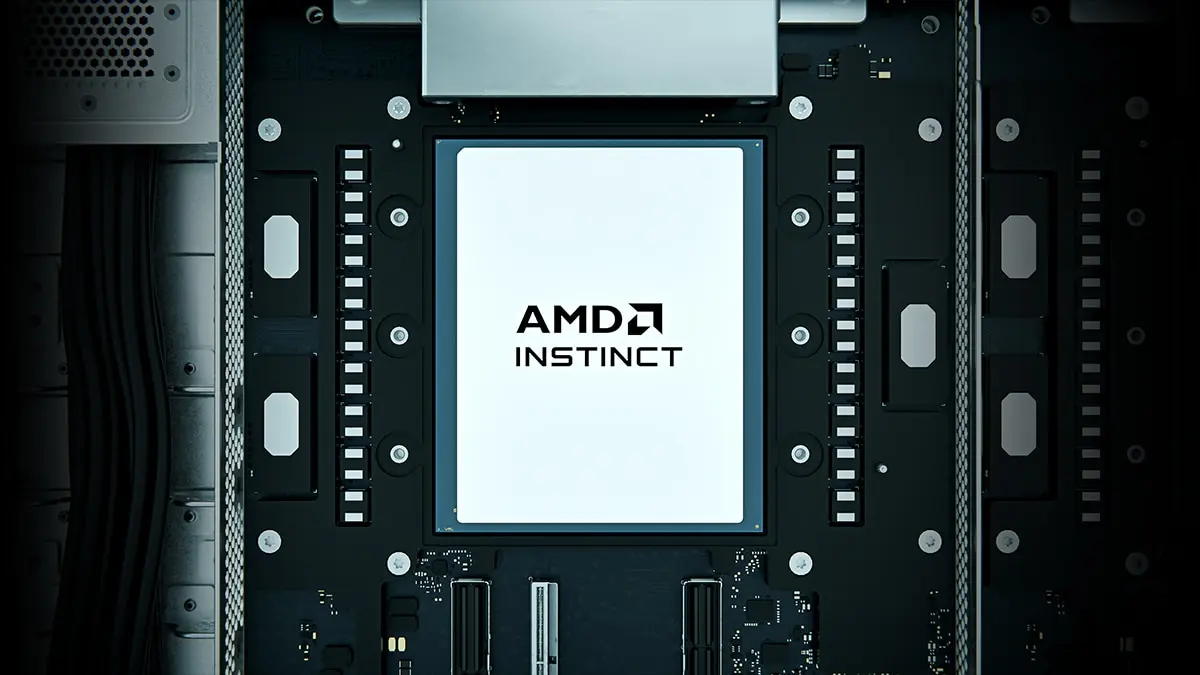
AMD Instinct MI455X accelerator used in current AI infrastructure
AMD Instinct MI455X
Technology ecosystems we can design aroundFor example, selection can follow the workload, data, budget and supply.

A managed capability, not a novelty

AI only creates value when the operating model works

In practice, managed AI services Australia must connect models and automation to your access rules, information, cyber controls, staff habits and clear business goals.

One accountable teamAs a result, AI, Microsoft 365, cyber, cloud and support work together.
Controlled first deploymentFirst, start with one workflow, named owners and clear human review points.
Commercial visibilityIn addition, keep project, licence, model-use and infrastructure costs separate.
Continuous improvementFinally, review use, quality, risk and workflow results every month.

CTA 01 · Start with the evidence

Find the first AI workflow worth funding

Therefore, map value, access, privacy, cyber risk and running cost before buying more tools.

Review from $4,900 + GSTBook the readiness review

Three commercial stages

Managed AI services Australia: from readiness to operations

In other words, each stage has a clear result and decision point. Also, prices are guides in Australian dollars, exclude GST and are confirmed after scope.

01

AI Readiness & Governance Review

First, rank the safest and most useful ideas before you pay for a build.

From $4,900 + GST
  • Workflow and stakeholder discovery
  • Licence, data and permissions review
  • Shadow-AI and employee-use assessment
  • Risk-ranked use-case register
  • 90-day roadmap and pilot scope
Start with readiness
02

AI Pilot & Implementation

Next, deliver one clear workflow with access controls, testing and staff support.

From $9,900 + GST
  • One approved workflow or assistant
  • Copilot, OpenAI, Claude or API automation
  • Human approval and exception paths
  • Testing, documentation and training
  • Baseline and post-pilot measures
Scope the first pilot
03

Managed AI Operations

Finally, keep approved AI useful, secure, supported and improving after launch.

From $1,950 / month + GST
  • Monthly governance and access review
  • Usage, quality, cost and risk reporting
  • Workflow monitoring and maintenance
  • Prompt, process and knowledge updates
  • Training and quarterly roadmap
Discuss managed AI

Current GPU architecture options

The latest accelerators—without pretending every workload needs an AI factory

However, most businesses do not need to own these systems. Therefore, Compuloop compares private, hosted and cloud GPU options based on model size, speed, privacy, power, cooling, budget and current supply.

NVIDIA Blackwell Ultra GPU platform for managed AI services Australia
NVIDIA

Blackwell Ultra / GB300 architecture

For example, NVIDIA lists GB300 NVL72 for large-scale AI reasoning. In addition, a full system combines 72 Blackwell Ultra GPUs with 36 Grace CPUs.

  • Up to 279 GBHBM3E per Blackwell Ultra GPU
  • 130 TB/sNVLink bandwidth at GB300 NVL72 scale
  • 20 TBTotal GPU memory in GB300 NVL72
  • Best fitLarge inference, training and provider-scale AI

For clarity, these details come from the maker. Therefore, we confirm supply, region and delivery during scope.

AMD Instinct MI455X GPU for managed AI services Australia
AMD

Instinct MI455X / MI400 architecture

Similarly, AMD lists MI455X as its current 5th-generation CDNA chip for advanced AI and high-performance computing. In addition, it supports the open ROCm software stack.

  • 432 GBHBM4 memory per MI455X accelerator
  • 23.3 TB/sPeak memory bandwidth
  • 5th Gen CDNACurrent accelerator architecture
  • Best fitOpen-stack AI, HPC and sovereign deployments

For clarity, these details come from the maker. Therefore, we confirm supply, region and delivery during scope.

Private GPU

On-premises or colocated

For instance, use dedicated capacity when you need tighter control or steady use.

Cloud GPU

Scale when required

By contrast, use cloud capacity for pilots, short peaks and work where ownership would cost more.

Hybrid AI

Keep each component where it fits

Alternatively, combine Microsoft 365, APIs, Australian or US hosting and private parts under clear controls.

CTA 02 · Architecture before hardware

Scope the right GPU, cloud and data-location model

As a result, your plan will fit the workload—not a vendor logo or an oversized hardware wish list.

Australia + United States optionsPlan AI infrastructure

Model serving & deployment systems

The right runtime for each AI workload

Compuloop can design around local, private, hosted and GPU-scale systems—selecting the stack by security, model size, throughput, supportability and cost.

Practical first workloads

Use cases with a visible owner and measurable result

For example, the first rollout can solve a real delay without giving AI free control.

Business team reviewing shared knowledge on a laptop

Knowledge assistant

First, give approved staff source-linked answers from policies, guides and service records.

Customer support specialist handling an incoming request

Inbox and request triage

Next, sort enquiries, pull out details and draft replies while people approve the final action.

Professional reviewing documents beside a laptop

Document intake

Then capture fields, check what is missing and move approved data into existing workflows.

Professional analysing business reports on a computer screen

Management reporting

Meanwhile, turn work data into clear issues, priorities and useful summaries.

Microsoft 365-style remote collaboration on a laptop

Microsoft 365 automation

Also, join Copilot, Teams, SharePoint and Power Automate to a clear business process.

IT technician delivering managed services in a server environment

AI-supported service delivery

Finally, help staff research, draft and follow up faster while the service owner stays in control.

Security and governance by design

Controls that stay with the service after launch

Above all, Compuloop follows ASD small-business AI guidance and OAIC privacy guidance. As a result, the service includes careful checks, approved use, least access, staff training, human review and regular updates.

Approved platforms

For example, review the vendor, account, data terms and use case before rollout.

Least privilege

Therefore, limit links, accounts and knowledge sources to a real need.

Human decisions

In addition, name reviewers and approval steps for high-impact actions.

Evidence and logs

Finally, keep tests, change records, use reports and regular risk checks.

CTA 03 · Operate what works

Turn a successful pilot into managed AI operations

In short, keep ownership clear with monthly checks, cost reports, workflow care, training and a plan for the next improvement.

From $1,950 / month + GSTDiscuss managed operations

20 managed AI questions answered

What Australian businesses ask before adopting AI

Clear answers on productivity, security, cost, governance and measurable results—before you commit to a platform or project.

1. How can AI improve productivity in our business?

AI can reduce time spent searching for information, drafting routine content, triaging requests, entering data and producing reports. Compuloop starts with a measurable workflow, records the current time and error rate, then tests whether AI produces a genuine improvement.

2. Is Microsoft Copilot worth the investment?

Copilot can be worthwhile when your team already works in Microsoft 365 and has repeatable tasks across Outlook, Teams, Word, Excel and SharePoint. Value depends on licensing, information quality, permissions, training and adoption, so a focused pilot is safer than buying licences for everyone immediately.

3. Can AI automate our repetitive administrative tasks?

Yes. Suitable examples include classifying enquiries, extracting fields from approved documents, creating draft responses, updating records and routing work for approval. Human review and exception handling should remain in the process where errors could affect customers, money, safety or compliance.

4. How secure is our company data when using AI tools?

Security depends on the product, account type, configuration, data location, retention terms and connected systems. Compuloop assesses identity controls, least-privilege access, data classification, logging, vendor terms and leakage risks before an AI tool is approved.

5. Can AI access confidential business information?

Only when the platform and your permissions allow it. Confidential information should not be entered into unmanaged public tools; approved business platforms need defined access, protected knowledge sources, retention settings and clear rules for sensitive data.

6. Which AI platform is best for our business: Copilot, ChatGPT, Gemini, or others?

There is no universal winner. Microsoft Copilot often suits Microsoft 365 workflows, while ChatGPT, Gemini, Claude, approved APIs and private models may fit other requirements. Compuloop compares the workload, data sensitivity, integrations, supportability and total running cost before recommending a platform.

7. How much does an AI implementation project typically cost?

Compuloop's AI Readiness & Governance Review starts from $4,900 + GST, a focused pilot starts from $9,900 + GST, and Managed AI Operations starts from $1,950 per month + GST. Final pricing depends on scope; software licences, API or model consumption, cloud use, hardware and substantial custom development are quoted separately.

8. What measurable ROI can we expect from AI?

ROI should be calculated from a real baseline, not a generic industry promise. Useful measures include hours saved, faster response times, fewer errors, shorter processing cycles, improved service capacity and avoided risk, compared with implementation and ongoing operating costs.

9. Can AI integrate with Microsoft 365, CRM, and ERP systems?

Often, yes. Integration may use supported connectors, Power Automate, vendor APIs, approved middleware or a controlled custom workflow. Access rights, data quality, audit logs, API limits and failure handling must be designed before production use.

10. How long does it take to deploy AI solutions?

A focused pilot commonly takes four to eight weeks after scope, access and data are ready. More complex integrations, security reviews, data remediation or custom development can extend the schedule, so Compuloop defines milestones and approval points before work begins.

11. Will AI reduce staff workload or replace jobs?

AI is usually most useful when it removes repetitive steps and gives staff more time for judgement, customer work and complex decisions. Job impacts depend on the workflow and organisation; changes should involve clear ownership, consultation, training and human accountability.

12. How do we govern and control employee use of AI?

Use an approved-tools register, an AI-use policy, named owners, data-handling rules, role-based access, staff training, human-review requirements and regular access and usage reviews. Governance should cover both company-provided tools and unapproved shadow AI.

13. Can AI help with cybersecurity and threat detection?

Yes, AI can help summarise alerts, correlate events, prioritise investigations and draft response steps. It does not replace security controls or skilled review, and attackers also use AI, so outputs must be validated within a layered cybersecurity program.

14. What AI training should employees receive?

Training should cover approved tools, prohibited data, privacy, secure prompting, verification, copyright and intellectual-property risks, bias, escalation and human approval. Role-specific examples are more effective than one generic awareness session.

15. How do we ensure AI-generated content is accurate?

Ground answers in approved sources, require citations where practical, restrict the task, test representative cases and keep human approval for important outputs. Compuloop can also define quality checks, exception paths, monitoring and a process for correcting source information.

16. Can AI help automate customer service and support?

Yes. AI can classify enquiries, suggest knowledge articles, summarise conversations, prepare draft replies and route cases. Customers should have a clear path to a person, and high-impact or sensitive decisions should never rely on an unchecked automated response.

17. What AI use cases provide the fastest business wins?

The fastest wins usually involve frequent, text-heavy tasks with clear source material and a human reviewer—for example knowledge search, inbox triage, document intake, meeting follow-up and management reporting. The best first use case is valuable enough to measure but contained enough to control.

18. How can AI assist with reporting, analytics, and decision-making?

AI can combine approved information, explain trends, prepare summaries, surface anomalies and draft recurring reports. Decisions still require reliable source data, transparent assumptions, access controls and review by the accountable business owner.

19. What compliance and regulatory risks exist when using AI?

Risks can include privacy, confidentiality, intellectual property, discrimination, recordkeeping, contractual commitments, industry rules and misleading outputs. Requirements vary by organisation and use case, so Compuloop documents the technical controls and works with your legal or compliance advisers where formal advice is required.

20. Can an MSP create a roadmap for AI adoption across our organisation?

Yes. Compuloop can assess workflows, licences, information, security, staff readiness and commercial priorities, then produce a risk-ranked roadmap with pilot recommendations, owners, measures, dependencies and a 90-day action plan.

First, technology names, logos and product images belong to their owners and are shown for identification. In addition, current platform details were checked on 17 October 2026 against official NVIDIA and AMD product information. However, supply, design and commercial terms are confirmed during scope.