

The AI events Sydney 2026 calendar has become unusually important for business leaders this July. Two very different gatherings—OpenSummit.AI at Sydney Town Hall and the AI Innovation Summit at Rydges Sydney Central—will put practical adoption, leadership, governance and measurable business value on centre stage within eight days of each other.
By the Compuloop Editorial Team | 21 July 2026 | Event details checked against organiser sources
For Australian business owners, this is more than another round of technology conferences. AI has moved into everyday operations through Microsoft 365, accounting systems, customer platforms, meeting tools and staff using public chatbots. The useful question is no longer whether AI will affect the business. It is which use cases are worth backing, what controls are needed and who will remain accountable.
Both summits promise answers, but they serve different audiences. OpenSummit.AI is a concentrated operator-focused event built around founders and businesses already using agentic AI. The AI Innovation Summit is a multi-day executive programme about turning experimentation into sustainable organisational capability.
AI events Sydney 2026 at a glance
| Event | Main programme | Venue | Best suited to |
|---|---|---|---|
| OpenSummit.AI | Thursday 23 July 2026 | Sydney Town Hall, 483 George Street, Sydney | Founders, owners, operators and decision-makers looking for practical examples of AI already in production |
| AI Innovation Summit 2026 | Summit days Wednesday 29 and Thursday 30 July; optional workshops on 28 and 31 July | Rydges Sydney Central, 28 Albion Street, Surry Hills | Executives, transformation leaders, CIOs, data leaders and teams responsible for scaling AI safely |
Dates, speakers and ticket availability can change. Check each organiser's current programme before booking travel or making purchasing decisions.
1. OpenSummit.AI brings operators to Sydney Town Hall
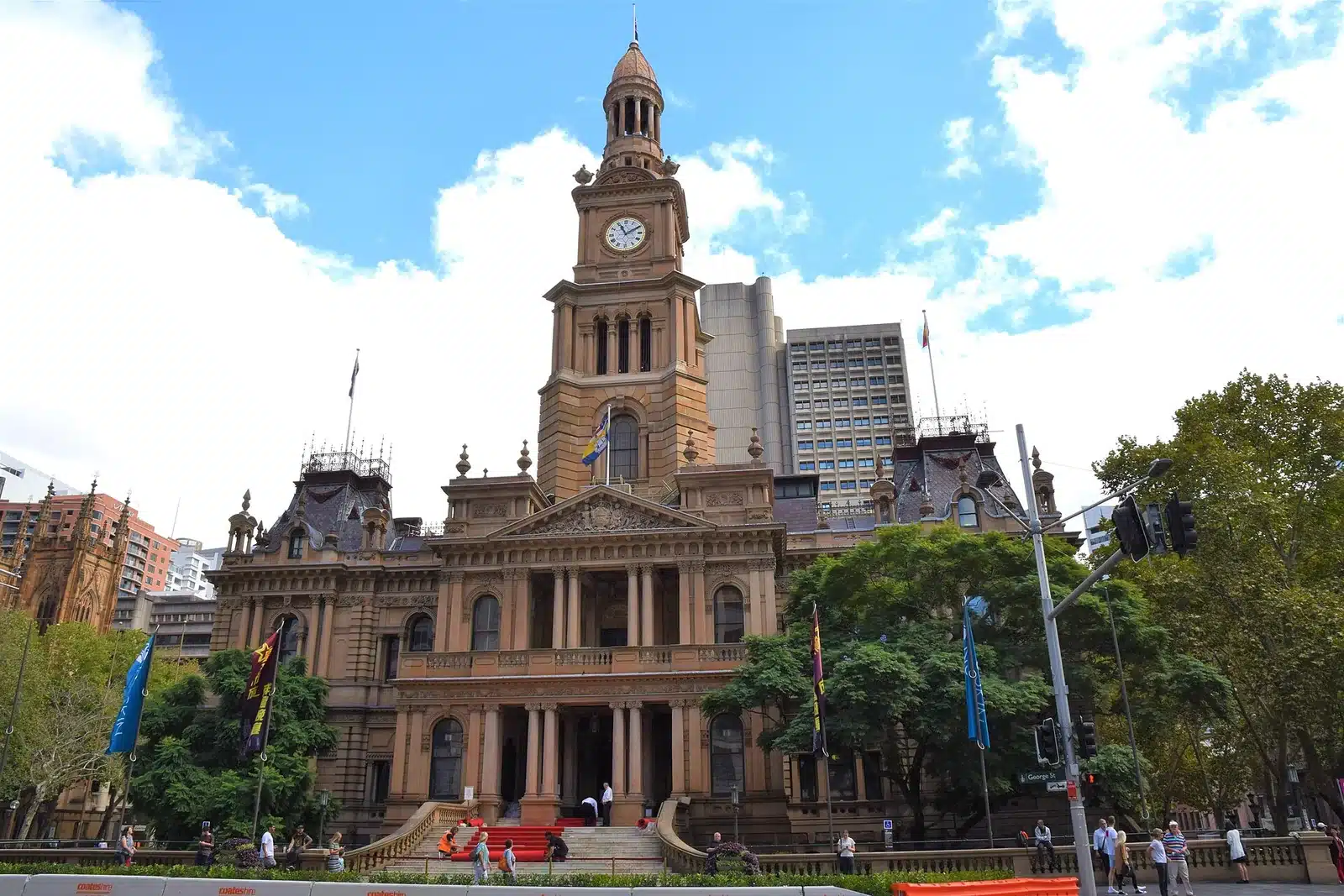
OpenSummit.AI is scheduled for Thursday 23 July 2026 at Sydney Town Hall. Its official site describes an audience of 1,600 founders, operators and decision-makers and positions the event around people already running agentic AI in production.
That operator emphasis matters. Many AI events lean heavily on product announcements or broad predictions. OpenSummit.AI is selling a tighter proposition: practical keynotes, business examples and direct discussion about what teams are deploying now.
The programme is hosted by the team behind Norg AI. The announced line-up includes:
- Professor Toby Walsh, Chief Scientist at the UNSW AI Institute, as headline keynote speaker.
- Clayton Cross, founder of ThriveAI, as MC and opening keynote speaker.
- Kate Save, founder and chief executive of Be Fit Food.
- Jack Bear, founder of Norg AI.
- Georgie Healy, host of the In the Blink of AI podcast.
- John McGiffin, co-founder of Natural Velocity.
- Richard Welch MP, speaking on AI and the digital economy.
- Thomas Tyack, chief technology officer at Norg AI.
- Dr Kia Pajouhesh, founder and managing director of Smile Solutions Group.
Professor Walsh is a significant draw for anyone concerned about the line between rapid adoption and responsible deployment. UNSW identifies him as a Scientia Professor of Artificial Intelligence, while his current work focuses on trustworthy AI, including fairness, transparency, explainability, privacy and robustness.

What business leaders should listen for at OpenSummit.AI
The strongest value will not come from collecting a list of AI tools. Those lists date quickly. Instead, leaders should listen for evidence about implementation:
- What was the business problem before AI entered the discussion?
- Which data, systems and staff roles were required to make the solution useful?
- What did the organisation stop doing after implementation?
- How was output quality measured, and where did a human remain responsible?
- What security, privacy and access controls were needed before the system went live?
Those questions separate a durable operating improvement from an impressive demonstration. They also make the event more useful to a small or mid-sized business that cannot afford months of experimentation without a clear result.

2. The AI Innovation Summit takes an executive view
The AI Innovation Summit 2026 runs at Rydges Sydney Central in Surry Hills. The core conference is held on 29 and 30 July, with a pre-conference workshop on 28 July and a post-conference workshop on 31 July.
This structure gives the event a different character. Rather than concentrating the programme into one afternoon, The Leadership Institute has built a broader executive agenda around organisational readiness, transformation, governance, workforce trust and moving AI projects beyond proof of concept.
The speaker line-up spans consulting, retail, engineering, defence, travel, data and enterprise technology. Announced speakers include:
- Professor Jon Whittle, founder of Goldilocks AI and Professorial Fellow at Melbourne Business School.
- Charmaine Zets, Managing Director, AI – ASPAC and Australia at KPMG.
- Ketan Chowhan, Head of Growth and Innovation at NTT DATA.
- Fahim Khondaker, Partner, Data and AI at BDO in Australia.
- Ankit Gupta, Group Chief Data and AI Officer at The Warehouse Group.
- Jonathan Butow, Head of AI Innovation at SAS.
- Dr Mark van Rijmenam, founder and futurist at Futurwise.
- Paul Murphy, Chief Information Officer at GHD.
- Samuel Drown, Director of Product: CX and AI at Luxury Escapes.
- Amit Agarwala, Head of Emerging Technology and AI at BlueScope.
- Mike Moroney, Executive Director of the Defence AI Centre.
- Arvind Bhatt, Chief AI and Data Officer and founder of Skillo Tech.
Professor Whittle opens the first summit day with a session about making AI work beyond the hype. His background gives that topic weight. A CSIRO profile records his work as director of Data61 and host of the Everyday AI podcast, while the summit programme draws on three decades of AI leadership and adoption experience.

The sessions with the clearest business value
Several programme themes deserve attention from Australian organisations that have already trialled AI but have not yet built a repeatable operating model.
Moving from pilots to measurable value. Sessions from Jon Whittle, Ketan Chowhan, Fahim Khondaker and Ankit Gupta address the gap between a successful demonstration and a capability the business can fund, govern and maintain.
Keeping human judgement in the system. Jonathan Butow's session focuses on using AI to improve decisions rather than replace responsibility. That distinction is particularly important when AI affects staff, customers, pricing, support priorities or security decisions.
Building trust during workforce change. Paul Murphy's case study places people and performance alongside technology. AI programmes often stall because employees do not understand the goal, fear the impact or receive no practical training.
Operating AI in high-stakes environments. Mike Moroney's Defence AI Centre session is designed around safety, accountability and trust where failure has consequences beyond cost. Even smaller businesses can learn from that discipline: identify the decisions that matter most, document who approves them and never treat a plausible AI answer as evidence by itself.
The workshops extend those themes. Daniel San Martin leads the 28 July session on growth and transformation through AI disruption. Nathan Baird leads the 31 July workshop on human leadership in the age of AI.
Which Sydney AI summit is the better fit?
The two events are not direct substitutes.
Choose OpenSummit.AI if your priority is speed, practical examples, founder-led implementation and seeing how operators are using emerging AI systems now. Its concentrated format should suit owners and managers who want a fast briefing and useful contacts without committing to a multi-day conference.
Choose the AI Innovation Summit if your organisation is already dealing with transformation at scale. The agenda is better aligned with executives responsible for governance, workforce change, data readiness, customer impact and moving multiple AI initiatives into production.
Some leaders may benefit from both. OpenSummit.AI can surface new operating models and use cases. The following week's AI Innovation Summit can help test those ideas against governance, culture and enterprise delivery.
What should an Australian business do after the event?
Conference notes create no business value until they become decisions. Within five working days, attendees should turn what they learned into a short action record:
- One problem worth solving: define the process, cost, delay or customer friction before naming an AI product.
- One use case to test: choose a bounded task with a measurable result and manageable downside.
- One use case to reject or pause: record why the risk, data exposure or operating cost is not acceptable.
- One control to add now: this may be an approved-tool list, managed business accounts, multifactor authentication, data rules or mandatory human review.
- One accountable owner: name the executive or manager responsible for the result, not only the supplier implementing the technology.
- One review date: decide when the business will compare the promised benefit with real performance.
This discipline protects the business from conference enthusiasm. It also gives staff a clear signal that AI adoption is being managed as operational change, not as an unstructured race to use the latest tool.
Other Sydney AI dates worth knowing
The wider AI events Sydney 2026 calendar is also busy around these two summits.
- The AI in the NDIS Summit is scheduled for 24 July at ICC Sydney, with a specialist focus on responsible implementation, workforce pressure, compliance risk and service delivery in the disability sector.
- SAS Innovate on Tour Sydney is scheduled for 30 July at Sofitel Sydney Wentworth and focuses on data, trusted AI, analytics and governance.
- The AI Application Summit is currently advertised for 14 August 2026 at W Sydney. Some third-party listings still show 1 August, so use the organiser's live page as the source of truth.
That last correction is important. Event dates can move, aggregator listings can lag and speaker programmes can change. A useful event guide should distinguish verified organiser information from copied directory data.
Sydney's AI conversation has shifted from novelty to operations
What makes these July events timely is the change in the questions Australian businesses are asking. Twelve months ago, many conversations began with “What can generative AI do?” Today, better conversations start with:
- Which business process should change?
- What company or customer data will the system receive?
- Does the organisation have the right licences, access controls and audit logs?
- How will accuracy, cost and employee impact be measured?
- Who owns the output and remains responsible for the decision?
- What happens if the provider, model or pricing changes?
Compuloop's guide to an AI policy for Australian businesses covers the governance questions that should be answered before staff share company information with AI. Our analysis of the Australian AI standards landscape also separates current obligations and confirmed initiatives from proposals that are still developing.
The central lesson is practical: an AI strategy cannot sit apart from IT management. Useful adoption depends on identity security, well-managed Microsoft 365 access, clean data, suitable devices, recoverable systems, staff training and a supplier model the business can support.
Turn conference ideas into a controlled AI plan
The best outcome from the AI events Sydney 2026 programme is not a folder full of slides. It is a short list of business problems worth solving, a clear view of the data and systems involved, and a controlled path from experiment to production.
Compuloop helps Australian businesses assess AI opportunities in the context of their real technology environment. That can include an AI use-case and data-flow review, Microsoft 365 and Copilot readiness, identity and permissions, cybersecurity controls, vendor due diligence, staff policy and a practical implementation roadmap.
Move from AI interest to an accountable plan
Before buying another AI product, decide what outcome the business needs—and what must be true for the result to be trusted.
Book an AI Readiness and Governance Review or explore AI automation services for small business and managed IT support for small business.
Sources, images and editorial note
- OpenSummit.AI official event page
- AI Innovation Summit 2026 official programme
- UNSW profile: Professor Toby Walsh
- CSIRO profile: Professor Jon Whittle
- City of Sydney: Sydney Town Hall
- AI in the NDIS Summit official page
- SAS Innovate on Tour Sydney official page
- AI Application Summit official page
The Sydney Town Hall photograph is by Hugh Llewelyn and is used under CC BY-SA 2.0 via Wikimedia Commons. It was resized and converted to WebP for web delivery. Event artwork and speaker portraits are credited to the relevant official event pages and used for editorial reporting.
This independent Compuloop article is not sponsored by, affiliated with or endorsed by the events, venues, speakers or organisations named. Programme details were checked against organiser and institutional pages on 21 July 2026. Readers should verify current schedules, tickets and speakers directly with the organiser. AI-assisted tools helped organise public source material; the facts, distinctions, links and editorial conclusions were reviewed before publication.