

Compuloop News • 2 November 2026 • News and business analysis
The Sydney AI CCTV plan puts a practical question in front of Australian business owners: if a camera can flag an incident, who checks the alert, who can access the footage, and who is responsible when it gets something wrong?
The City of Sydney has approved public exhibition of a draft code that would allow AI-assisted camera and software analytics in its Street Safety Camera Program. This is not a confirmed nationwide rollout, and the council decision is not final adoption of the revised code. On 26 October, councillors agreed that the draft would return for adoption after exhibition and consideration of changes. Council decision
For businesses considering similar technology, the useful lesson is not to rush out and buy an AI camera. It is to decide what problem the system should solve—and what controls must surround it.
What the Sydney AI CCTV plan proposes
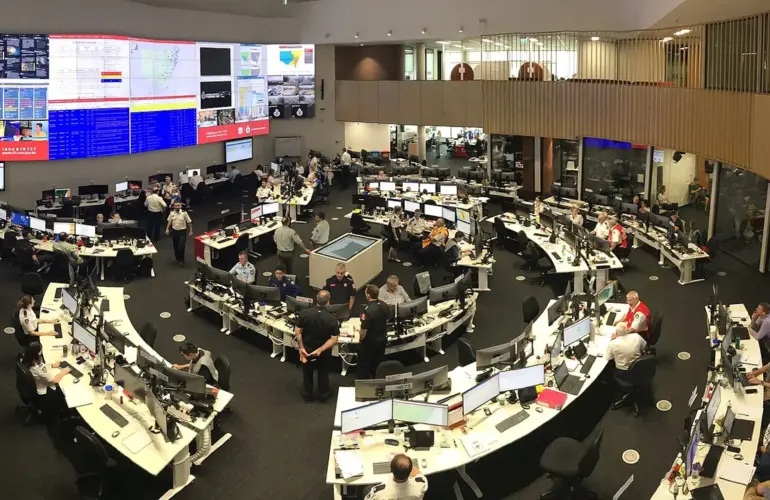
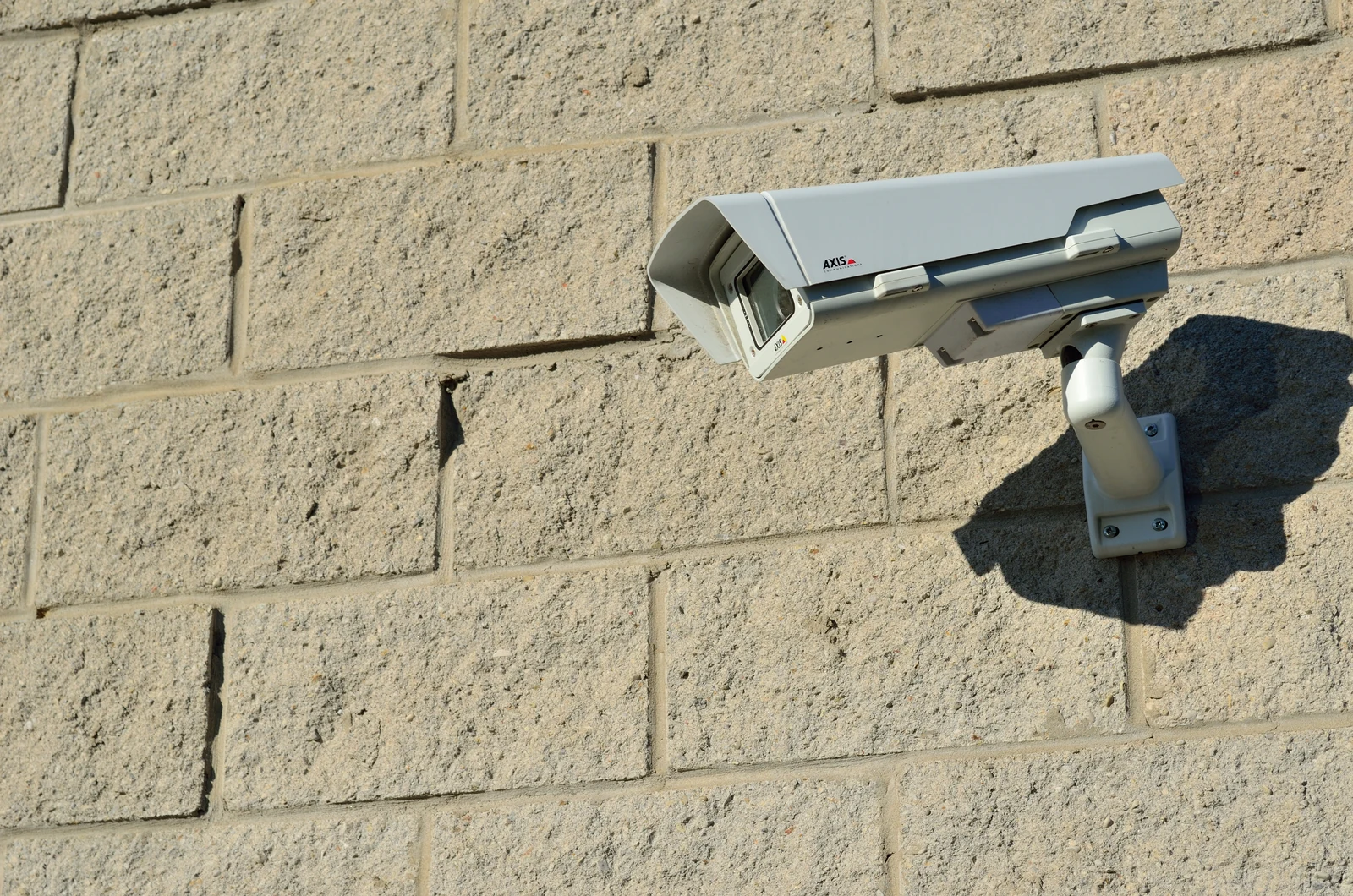
The existing program has more than 100 cameras monitored around the clock. The council report proposes analytics that could flag events such as an unexpectedly gathering crowd or people running away. It also describes tools to help staff filter footage using characteristics such as clothing colour, a carried bag or vehicle type.
The same report proposes extending ordinary recording retention from 28 to 30 days. These are proposed changes to this council program, not instructions for Australian businesses to adopt identical settings. Council report, 19 October 2026
Does the proposal include facial recognition?
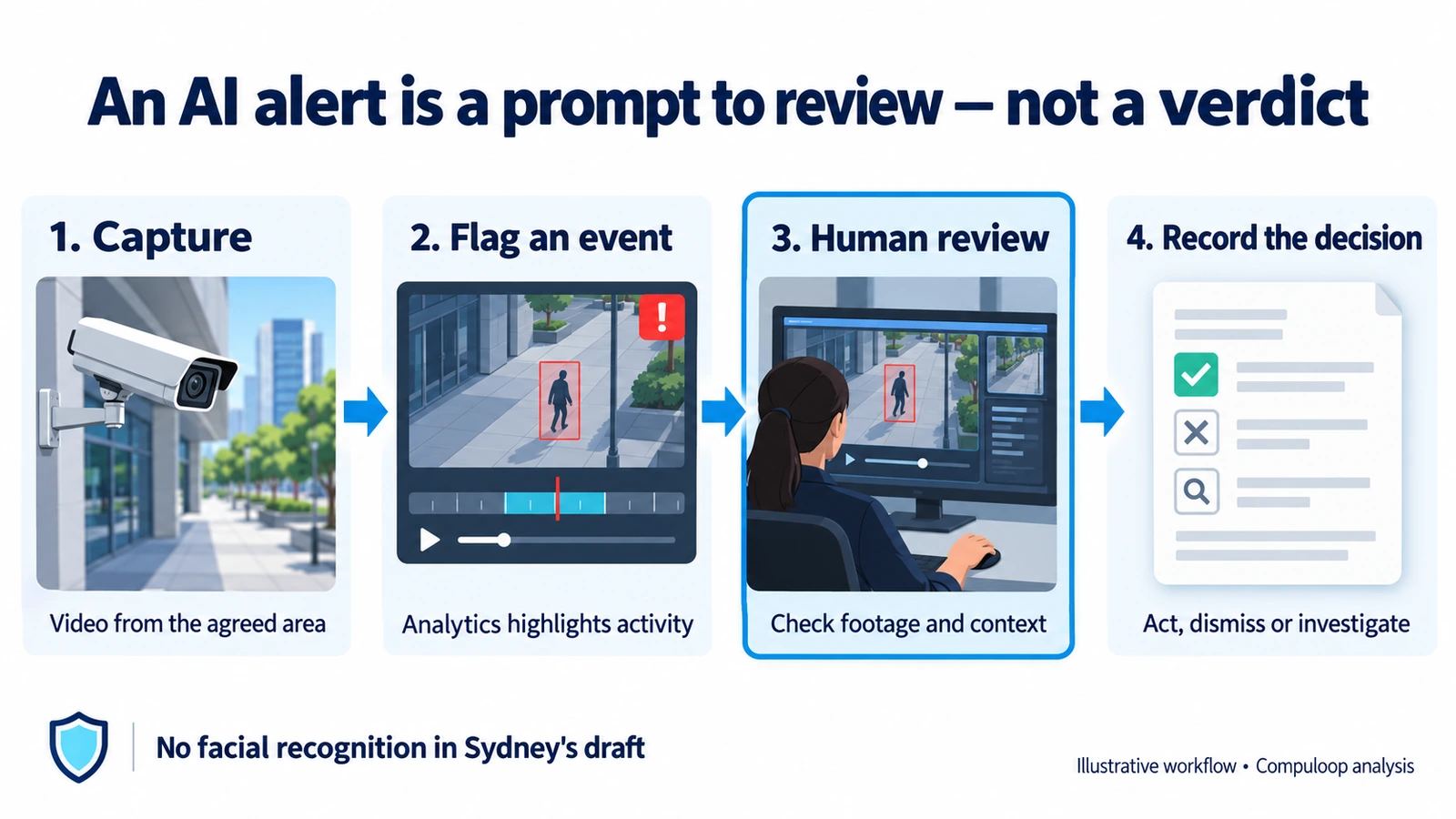
No. The draft explicitly rules out biometric identification, including facial recognition.
That distinction matters. Software that flags a movement or helps search for a red jacket is not the same function as matching a face to a person’s identity. It can still raise privacy and fairness concerns, so the absence of facial recognition does not remove the need for scrutiny.
Schedule 5 of the draft calls for active human oversight, testing and accountability. The system is intended to support staff, rather than let an automated recommendation determine an outcome without a person’s affirmative action. Draft code, section 1.4 and Schedule 5
Where would the footage and analytics run?
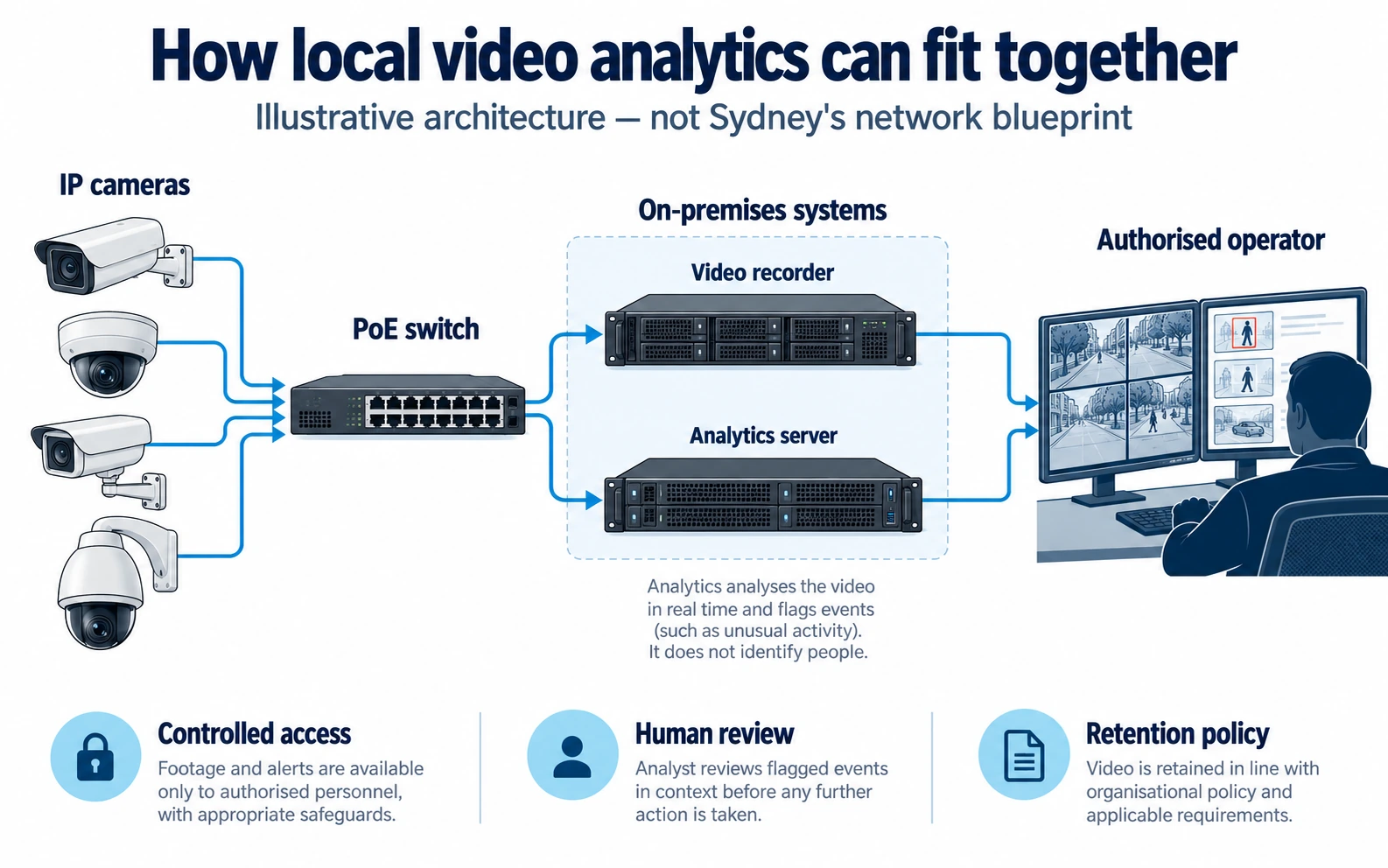
A supplementary council memo describes a closed camera network connected to on-premises servers and recorders at Town Hall House. It says system-based analytics would run on a dedicated server there, with no external system access available to the technology manufacturers or software developers.
The memo also says footage would not be released to enforcement agencies without human review. These are the council’s stated arrangements for the proposal—not an independent security audit or a guarantee that any on-premises system is secure. Council supplementary information
For a business, the equivalent question is simple: can your supplier explain where video is processed, where recordings are stored and who has access?
AI security cameras in Australia: five questions before buying
The following is Compuloop’s business analysis, not a claim that the council has imposed these requirements on private businesses.
1. What specific problem are we paying to solve?
Define one useful outcome before comparing features. That might be helping an authorised operator find relevant footage faster or identifying activity in an agreed restricted area.
Record how you will judge the result. Count the time spent reviewing false alerts as well as any time saved. More notifications are not automatically better security.
2. Who reviews an alert and decides what happens next?
Name the responsible person and their backup. Agree what information they need, when they respond and how they challenge an incorrect alert.
Keep a fallback process for outages or unreliable analytics. An unattended alert queue is not a response capability.
3. Who controls the footage and supplier access?
Ask for a clear data-flow diagram covering the cameras, recorder, analytics service and remote-access tools. Find out whether video or derived information leaves the site, which parties can access it, and how access is removed when a supplier changes.
Do not assume that a cloud service is unsuitable—or that a local recorder is safe—without checking the actual design.
4. How will the equipment remain supported and secure?
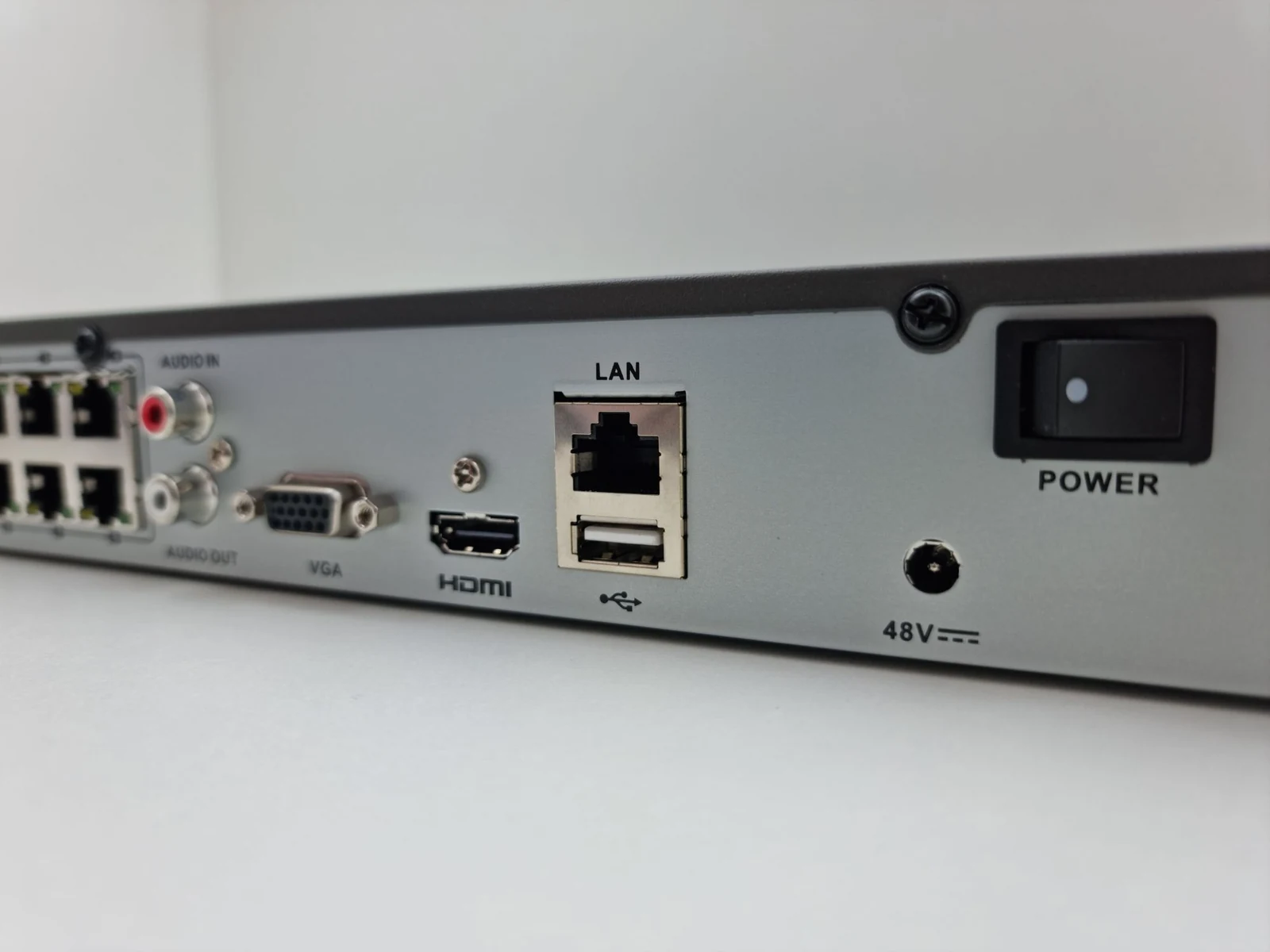
Ask about software support periods, security updates, administrator accounts and vulnerability handling before procurement. Australia’s cyber-security guidance identifies security cameras as connected devices that need effective protections, including strong credentials and maintained software. Government IoT security guidance
Include the recorder and management software in the review, not just the camera hardware. A planned replacement date is more useful than discovering that a critical device no longer receives updates.
5. Have we checked the privacy position for this site?
The OAIC says organisations covered by the Privacy Act must handle personal information collected by surveillance devices in accordance with the Australian Privacy Principles. Its guidance addresses notification, security and destruction or de-identification when information is no longer needed. State and territory laws can also apply. OAIC security-camera guidance
Get advice relevant to your workplace, location and proposed use. The Sydney council draft does not give a private business permission to introduce surveillance.
A sensible next step for business owners
Before approving an upgrade, ask for a short written brief: the intended benefit, data flow, access permissions, human-review process, support costs and exit plan.
Then pilot the agreed use in a controlled setting and review the evidence before expanding it. Avoid buying a larger system simply because an AI label sounds more capable.
Compuloop’s Managed AI services and network and server security assessments provide relevant starting points for discussing governance and infrastructure risks. Any camera-specific work needs an agreed scope; this article does not claim Compuloop operates Sydney’s camera program or supplies its proposed system.
Want to understand the IT and access risks around your connected systems? Talk to Compuloop about a scoped review.
Status checked against council records on 2 November 2026. This article distinguishes the draft proposal from adopted policy and confirmed implementation. General information, not legal advice.